Purchasing, Receiving, and Storage
Food safety starts before food ever reaches your kitchen. Buying from approved suppliers, inspecting deliveries carefully, and storing food correctly keep contamination out and quality high. This chapter walks through the flow from purchase order to shelf.
Approved Suppliers and Purchasing
The safest food comes from approved, reputable suppliers who have been inspected and meet all applicable local, state, and federal laws. You should review a supplier's most recent inspection report and confirm they follow good practices during processing, storage, and transport. Whenever possible, schedule deliveries for off-peak hours so staff can inspect them properly instead of rushing during a rush. A key principle is to inspect deliveries immediately upon arrival, because TCS food left on a loading dock quickly climbs into the danger zone. Build a relationship with suppliers so problems can be corrected. Buying cheap food from an unapproved source is a false economy — one contaminated shipment can cause an outbreak that shuts you down.
Receiving Temperatures
When a delivery arrives, check temperatures with a clean, sanitized, and calibrated thermometer. Cold TCS food should be received at 41°F or lower. Live shellfish should arrive at an air temperature of 45°F or lower and be cooled to 41°F within four hours; shucked shellfish also at 45°F or lower. Shell eggs must be received at an air temperature of 45°F or lower. Milk can be received at 45°F or lower and must be cooled to 41°F within four hours. Hot TCS food should be received at 135°F or higher. Frozen food must be frozen solid with no signs of thawing and refreezing, such as large ice crystals, water stains, or fluids on the packaging. Insert the thermometer stem into the thickest part of the product or between two packages for temperature checks.
Rejecting Deliveries
You have the right — and the duty — to reject food that is not safe or acceptable. Reject TCS food that is out of temperature, and any item with signs of pests, mold, an abnormal color or texture, a bad odor, slimy or sticky surfaces, or damaged and leaking packaging. Reject cans that are severely dented on the seam, swollen, rusty, or missing labels. Reject food with signs of thawing and refreezing. When you reject an item, set it aside from accepted food, tell the delivery driver exactly what is wrong, get a signed adjustment or credit slip, and log the rejection. Never accept it "just this once" to keep the peace — accepting unsafe food transfers all the risk to your guests.
Date Marking and Storage Order
Ready-to-eat TCS food that is prepped in-house or opened from a package and held longer than 24 hours must be date marked. The food can be stored for a maximum of seven days when held at 41°F or lower, counting the day of preparation as day one, so a food made on Monday must be sold or discarded by Sunday. When combining foods with different dates, the earliest date governs the discard date. In the cooler, store food by top-to-bottom cook temperature to prevent cross-contamination: ready-to-eat food on top, then seafood, then whole cuts of beef and pork, then ground meat, and raw poultry on the bottom shelf. Store all food at least six inches off the floor, keep it in original or clearly labeled containers, and follow FIFO — first in, first out — to use older stock first.
Last updated: October 2026
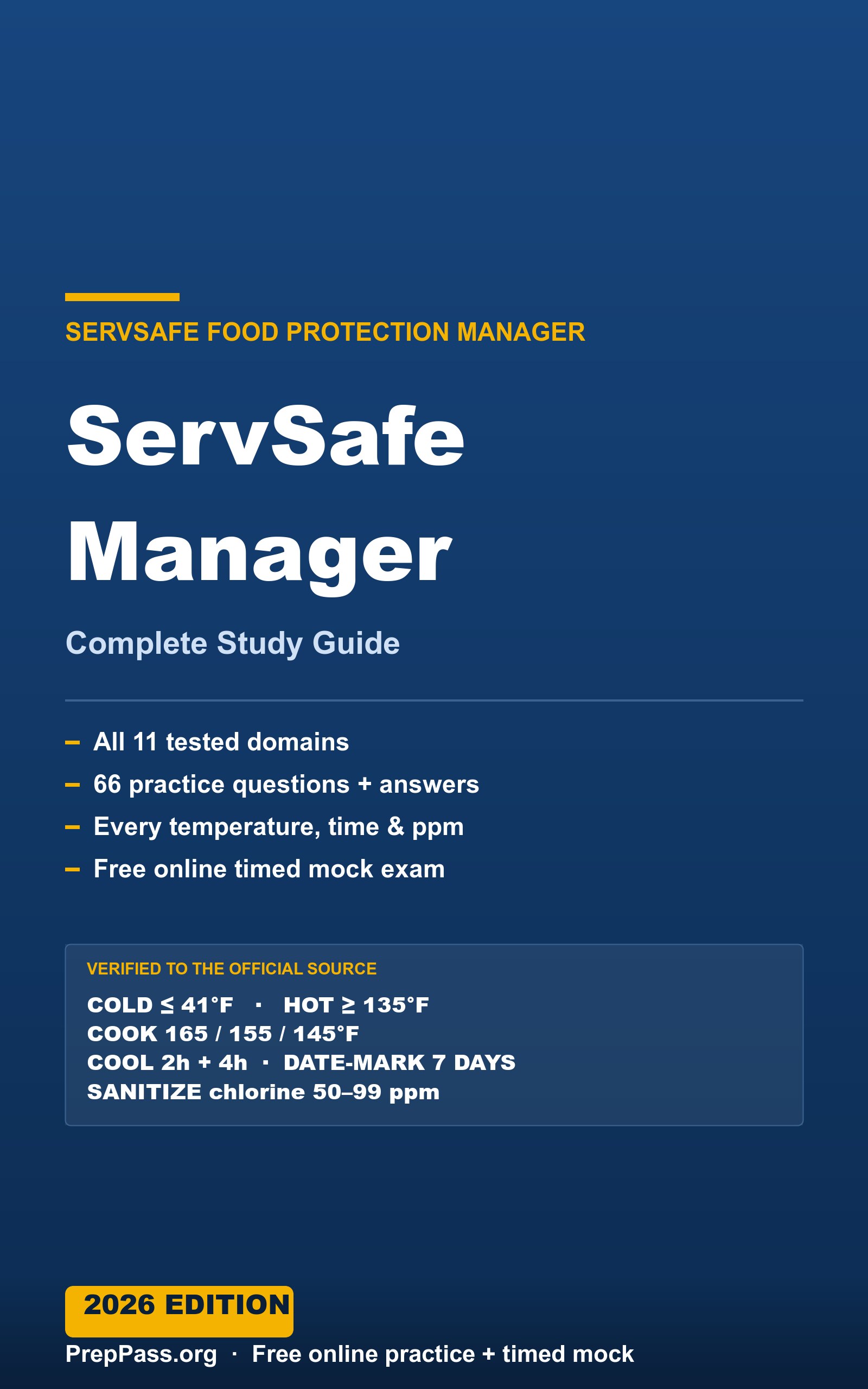
In the ServSafe Food Protection Manager guide: A quiz closing each of the 8 chapters, with an answer key that explains every one. Practice here stays free.