Facilities, Cleaning, Sanitizing, and Pest Control
A clean, well-built facility with safe water and no pests is the foundation everything else rests on. This chapter covers the difference between cleaning and sanitizing, the three-compartment sink and dish machines, protecting the water supply, and integrated pest management.
Cleaning vs. Sanitizing and the Three-Compartment Sink
Cleaning removes food and dirt from a surface; sanitizing reduces pathogens on that surface to safe levels. You must clean before you sanitize, because sanitizer cannot work through a layer of grease. Any surface that touches food must be cleaned and sanitized after each use, when you switch between raw and ready-to-eat food, any time a task is interrupted, and at least every four hours during continuous use. The classic manual method is the three-compartment sink used in order: wash in the first sink with detergent at 110°F or higher, rinse in the second sink with clean water, and sanitize in the third sink with a chemical solution or hot water at 171°F or higher. Then let items air dry — never towel dry, which recontaminates them. Rinse and scrape dishes before washing and change the water when it gets dirty.
Sanitizer Concentrations
Chemical sanitizers only work within a specific concentration, water temperature, and contact-time window, so managers must test them with the correct test strips. For chlorine (bleach) sanitizer, use a concentration of 50 to 100 ppm with a contact time of at least 7 seconds; the water should be around 55°F to 100°F depending on pH. For iodine, use 12.5 to 25 ppm with at least 30 seconds of contact time. For quaternary ammonium (quats), follow the manufacturer's directions, typically around 200 ppm with at least 30 seconds of contact. Too little sanitizer will not kill pathogens; too much can be toxic and leave residue. Water temperature and pH affect chlorine's strength, so always verify with a test kit rather than eyeballing it. Store sanitizer buckets away from food and change the solution when it becomes dirty or drops below concentration.
Dish Machines and Backflow Prevention
High-temperature dish machines sanitize with heat, and the final sanitizing rinse must reach at least 180°F (160°F on the dish surface); a built-in temperature gauge and irreversible-registering thermometer verify it. Chemical dish machines sanitize with a solution, usually chlorine, at lower water temperatures per the manufacturer's specs. Either way, the machine must be clean, correctly loaded, and checked each shift. Protecting the water supply is equally critical. Backflow is the reverse flow of contaminated water into the potable supply, often caused by back-siphonage when pressure drops. The best prevention is an air gap — a physical space at least twice the diameter of the supply pipe between the faucet and the flood rim of a sink. A hose left submerged in a mop bucket is a classic cross-connection hazard, so never leave one hanging in dirty water.
Integrated Pest Management (IPM)
Pests like rodents, cockroaches, and flies spread pathogens and contaminate food, so an integrated pest management program keeps them out through prevention, not just poison. IPM rests on three ideas: deny pests entry, deny them food and shelter, and work with a licensed pest control operator (PCO). Deny entry by sealing cracks, installing door sweeps and screens, keeping doors closed, and inspecting deliveries for signs of pests. Deny food and shelter by storing food and trash in tightly covered containers off the floor, cleaning up spills quickly, and removing clutter where pests hide. Learn the warning signs: droppings, gnaw marks, grease tracks, egg cases, and a stale smell. If pesticides are needed, only a licensed PCO should apply them, food must be protected or removed first, and chemicals stored away from food. Keep the PCO's documentation on file.
Last updated: October 2026
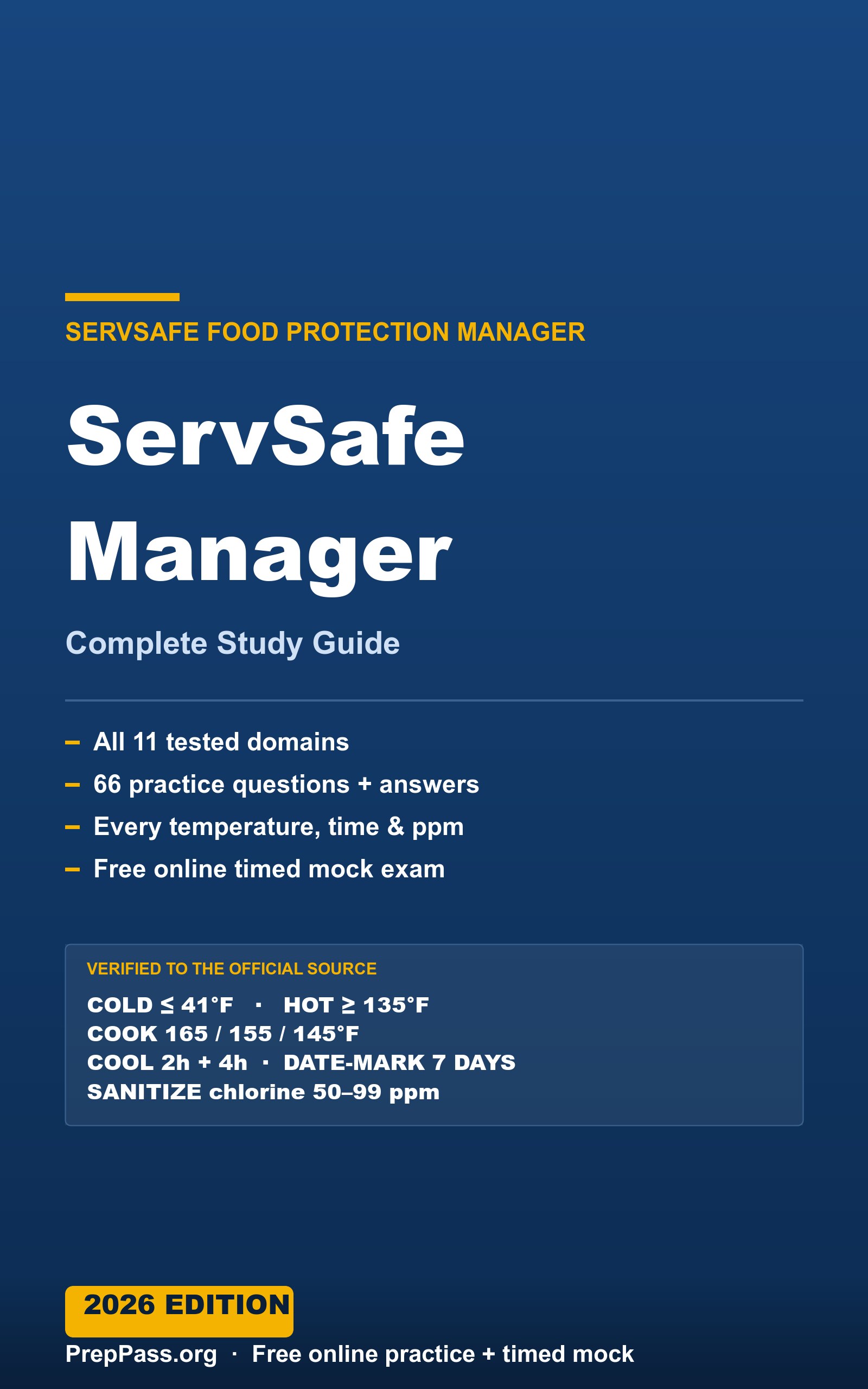
In the ServSafe Food Protection Manager guide: A quiz closing each of the 8 chapters, with an answer key that explains every one. Practice here stays free.