Bộ luật Bảo hiểm California và Đạo đức nghề nghiệp cho P&C
Đây là chủ đề lớn nhất trong kỳ thi môi giới-đại lý P&C của California. Các câu hỏi kiểm tra hiểu biết của bạn về những quy tắc mà Sở Bảo hiểm California (CDI) thi hành đối với người bán bảo hiểm và công ty bảo hiểm: cách định nghĩa các thực hành không công bằng, cách xử lý yêu cầu bồi thường, cách giành được, duy trì và mất giấy phép hành nghề, cách bảo vệ phí bảo hiểm như quỹ tín thác, cách bảo vệ quyền riêng tư của người được bảo hiểm, và cách phòng chống và trừng phạt gian lận. Mười hai phần dưới đây trình bày các đạo luật và quy định cung cấp phần lớn câu trả lời, kèm theo các thời hạn và số điều khoản chính xác hay được kiểm tra nhất. Nắm vững những nội dung này thì khoảng một trong năm câu hỏi của kỳ thi đã nằm trong tầm tay.
Đạo luật Thực hành Bảo hiểm Không công bằng: §§790-790.10
Các Điều 790 đến 790.10 của Bộ luật Bảo hiểm California tạo thành Đạo luật Thực hành Bảo hiểm Không công bằng (Unfair Insurance Practices Act), là đạo luật đạo đức cốt lõi của ngành. Đạo luật tuyên bố rằng các công ty bảo hiểm, người bán bảo hiểm và người điều chỉnh bồi thường không được tham gia bất kỳ phương pháp cạnh tranh không công bằng hoặc thực hành không công bằng hay lừa đảo nào được liệt kê tại §790.03. Ủy viên Bảo hiểm có quyền điều tra khiếu nại, tổ chức điều trần và ban hành lệnh chấm dứt hành vi, đồng thời có thể áp dụng mức phạt dân sự lên đến $5,000 cho mỗi hành vi, hoặc lên đến $10,000 cho mỗi hành vi khi hành vi mang tính cố ý. Đạo luật bao trùm rộng rãi hoạt động kinh doanh bảo hiểm, vì vậy áp dụng cho tiếp thị, bán hàng, thẩm định và xử lý bồi thường như nhau.
Trình bày sai sự thật, chuyển đổi, bôi nhọ, tẩy chay và hoa hồng ngầm
Kỳ thi thường yêu cầu bạn gán đúng tên gọi cho một tình huống, vì vậy hãy ghi nhớ các nhãn. Trình bày sai sự thật (misrepresentation) là bất kỳ tuyên bố sai nào về điều khoản, quyền lợi, cổ tức của hợp đồng hoặc tình hình tài chính của công ty bảo hiểm. Chuyển đổi (twisting) là một dạng đặc biệt của trình bày sai sự thật được dùng để dụ dỗ người được bảo hiểm hủy một hợp đồng và thay bằng hợp đồng khác bất lợi cho mình. Trộn lẫn (churning) là thực hành liên quan, sử dụng giá trị của các hợp đồng hiện có của người được bảo hiểm để dụ dỗ thay đổi hợp đồng. Bôi nhọ một công ty bảo hiểm là bất kỳ tuyên bố sai, mang tính chỉ trích ác ý hoặc hạ thấp uy tín nào về một hãng khác nhằm gây thiệt hại cho hãng đó trong kinh doanh. Tẩy chay, ép buộc và đe dọa bao gồm các thỏa thuận hoặc đe dọa giữa các công ty bảo hiểm về việc không giao dịch với một người. Hoa hồng ngầm (rebating) là việc cung cấp bất kỳ lợi ích có giá trị nào không được nêu trong hợp đồng, như tiền mặt, quà tặng hoặc chia hoa hồng, để dụ dỗ giao dịch.
Quy định Thực hành Giải quyết Bồi thường Công bằng (10 CCR §2695.1+)
Sở Bảo hiểm đã ban hành các quy định chi tiết tại Tiêu đề 10, Bộ luật Quy định California, các điều 2695.1 và tiếp theo, điều chỉnh cách mọi công ty bảo hiểm phải xử lý một yêu cầu bồi thường. Các quy định xác định các nghĩa vụ cụ thể mà công ty bảo hiểm có đối với cả người được bảo hiểm bên thứ nhất và người yêu cầu bồi thường bên thứ ba. Chúng được kiểm tra rất nhiều vì biến đạo luật chung về thực hành không công bằng thành các thời hạn cụ thể, định lượng. Ba thời hạn xuất hiện đi xuất hiện lại: 15 ngày để xác nhận một yêu cầu bồi thường, 40 ngày để chấp nhận hoặc từ chối sau khi nhận được bằng chứng yêu cầu, và 30 ngày để thanh toán sau khi đã thống nhất số tiền. Việc không đáp ứng các thời hạn này, khi thực hiện một cách cố ý hoặc như một thực hành kinh doanh chung, tự nó là một thực hành giải quyết bồi thường không công bằng.
Cấp phép cho người bán bảo hiểm và môi giới: §§1631, 1633, 1668
Điều 1631 là quy tắc nền tảng: không ai được phép chào bán, đàm phán hoặc ký kết hợp đồng bảo hiểm tại California mà không có giấy phép hợp lệ do Ủy viên Bảo hiểm cấp. Làm như vậy là một tội tiểu hình và là cơ sở để áp dụng phạt dân sự. Giấy phép chỉ được cấp sau khi ứng viên vượt qua kỳ thi sát hạch đủ điều kiện, nộp đơn và khoản bảo lãnh, và đóng các khoản phí quy định. Sau khi được cấp, giấy phép có hiệu lực theo §1633 với một nhiệm kỳ cố định, hai năm đối với hầu hết các ngành nghiệp vụ, và phải được gia hạn trước khi hết hạn. Điều 1668 liệt kê các căn cứ mà Ủy viên có thể từ chối, đình chỉ hoặc thu hồi giấy phép; các căn cứ này bao gồm bị kết án trọng tội hoặc tội liên quan đến đồi bại đạo đức, gian lận hoặc trình bày sai sự thật trong đơn xin cấp phép, hành vi cho thấy sự thiếu năng lực hoặc không đáng tin cậy, và bị kết án về bất kỳ thực hành không công bằng nào đã được thảo luận. Giấy phép là một đặc quyền, không phải quyền, và hành vi xấu ngoài văn phòng có thể là căn cứ cho biện pháp kỷ luật cũng như hành vi xấu trong văn phòng.
Giáo dục thường xuyên: §1749
California yêu cầu người bán bảo hiểm phải duy trì học tập suốt sự nghiệp, không chỉ tại thời điểm cấp phép ban đầu. Theo §1749 và các quy định tại 10 CCR §2188.1 và tiếp theo, một môi giới-đại lý hỏa hoạn và tai nạn phải hoàn thành 24 giờ giáo dục thường xuyên được phê duyệt trong mỗi nhiệm kỳ giấy phép hai năm, bao gồm ít nhất 3 giờ về đạo đức. CE phải được tham gia từ các nhà cung cấp được CDI phê duyệt và được theo dõi trong hồ sơ CE của người bán bảo hiểm. Điều 1749.3 đặt điều kiện cho việc gia hạn dựa trên việc hoàn thành: Ủy viên không thể gia hạn giấy phép nếu yêu cầu CE chưa được đáp ứng. Khi một người bán bảo hiểm đã giữ giấy phép P&C liên tục 30 năm và từ 70 tuổi trở lên, một số yêu cầu CE được giảm bớt, nhưng phần đạo đức vẫn được giữ nguyên.
Nghĩa vụ ủy thác và quỹ tín thác phí bảo hiểm: §§1733-1734
Khi một người bán bảo hiểm thu phí từ khách hàng, số tiền không thuộc về người bán; nó thuộc về công ty bảo hiểm sau khi trừ hoa hồng và, trong một số trường hợp, phải được trả lại cho người được bảo hiểm. Điều 1733 quy định bất kỳ khoản phí nào được người có giấy phép xử lý đều là quỹ ủy thác: phải được giữ trong tín thác, tách biệt khỏi các tài khoản cá nhân và tài khoản hoạt động kinh doanh, và được hạch toán chính xác. Điều 1734 củng cố điều này bằng cách coi việc chiếm dụng phí bảo hiểm là một hành vi vi phạm riêng biệt phải chịu kỷ luật giấy phép và có thể bị truy tố hình sự. Vi phạm điển hình là gửi phí của khách hàng vào tài khoản cá nhân hoặc tài khoản hoạt động chung của người môi giới, dù chỉ tạm thời, để trang trải các chi phí khác. Một tài khoản ngân hàng ủy thác hoặc quỹ tín thác phí bảo hiểm riêng biệt là thực hành an toàn, và nhiều hợp đồng đại lý cũng yêu cầu điều này.
Hủy bỏ, không gia hạn và thay thế đối với hợp đồng tài sản
California hạn chế thời điểm và cách thức một công ty bảo hiểm có thể chấm dứt một hợp đồng tài sản nhà ở. Khi một hợp đồng tài sản nhà ở thuộc tuyến cá nhân đã có hiệu lực trong 60 ngày, công ty bảo hiểm chỉ có thể hủy giữa kỳ vì các lý do hẹp theo luật định như không thanh toán phí, trình bày sai sự thật trọng yếu trong đơn, hoặc thay đổi đáng kể về rủi ro được bảo hiểm. Vào cuối kỳ hạn tự nhiên của hợp đồng, nếu công ty bảo hiểm chọn không gia hạn, công ty phải gửi cho người được bảo hiểm đứng tên thông báo bằng văn bản về việc không gia hạn ít nhất 45 ngày trước khi hết hạn, nêu rõ lý do. Sau khi tuyên bố tình trạng khẩn cấp về cháy rừng, lệnh tạm hoãn một năm theo §675.1/§677.2 cấm công ty bảo hiểm không gia hạn hoặc hủy hợp đồng chỉ vì tài sản được bảo hiểm nằm trong khu vực được tuyên bố. Các quy tắc về chi phí thay thế và tiết lộ tại 10 CCR §2695.180 và tiếp theo bảo vệ người được bảo hiểm khỏi việc bị bảo hiểm dưới mức khi xây dựng lại.
Quyền riêng tư: Đạo luật Bảo vệ Thông tin và Quyền riêng tư Bảo hiểm California (§791+)
California có bộ luật riêng tư riêng cho bảo hiểm, khác biệt với luật liên bang. Đạo luật Bảo vệ Thông tin và Quyền riêng tư Bảo hiểm California, tại §791 và tiếp theo, điều chỉnh việc một công ty bảo hiểm hoặc người bán bảo hiểm có thể thu thập, sử dụng và chia sẻ thông tin cá nhân khi nào. Trước khi thu thập thông tin từ một nguồn khác ngoài người nộp đơn hoặc người được bảo hiểm, chẳng hạn như một báo cáo điều tra của người tiêu dùng hoặc một cơ sở dữ liệu, công ty bảo hiểm phải gửi một Thông báo về Thực hành Thông tin (Notice of Information Practices). Đạo luật cũng cho người nộp đơn hoặc người được bảo hiểm quyền truy cập hầu hết thông tin cá nhân được ghi lại, yêu cầu chỉnh sửa các mục không chính xác và tìm hiểu lý do của một quyết định thẩm định bất lợi. Điều 791.13 hạn chế việc tiết lộ thông tin cá nhân cho bên thứ ba không liên kết trừ khi cá nhân đã ký giấy ủy quyền hoặc áp dụng một trong các ngoại lệ được liệt kê, chẳng hạn như điều tra gian lận hoặc kiểm tra của cơ quan quản lý.
Gian lận bảo hiểm: §1871.4 và SIU theo §1875.20
California coi gian lận bảo hiểm là tội phạm nghiêm trọng và trao cho các công ty bảo hiểm vai trò chủ động trong việc điều tra. Điều 1871.4 quy định rằng cố ý trình bày hoặc gây ra việc trình bày bất kỳ tuyên bố sai hoặc gian lận nào để hỗ trợ một yêu cầu bồi thường thường tai nạn lao động là bất hợp pháp; các vi phạm là wobbler với hình phạt lên đến năm năm tù tiểu bang và phạt tiền đáng kể. Điều 550 của Bộ luật Hình sự xử lý các yêu cầu bồi thường sai trong bảo hiểm tài sản và bảo hiểm xe với mức độ nghiêm trọng tương tự. Theo §1875.20 và tiếp theo, một số công ty bảo hiểm cấp bảo hiểm xe, bồi thường tai nạn lao động và các tuyến khác phải thành lập Đơn vị Điều tra Đặc biệt (Special Investigative Unit), hay SIU, được bố trí nhân sự và đào tạo để phát hiện gian lận nghi ngờ và báo cáo cho Bộ phận Chống gian lận của CDI. Điều 1879.5 trao quyền miễn trừ dân sự cho các công ty bảo hiểm báo cáo gian lận nghi ngờ một cách thiện chí, loại bỏ rào cản đối với việc báo cáo.
Quyền hạn của Ủy viên và CDI so với DMHC
Ủy viên Bảo hiểm là một quan chức được bầu cử toàn tiểu bang được giao bởi §12921 thi hành và thực thi Bộ luật Bảo hiểm, ban hành các quy định hợp lý, kiểm tra hoạt động của mọi công ty bảo hiểm và bảo vệ người tiêu dùng. Ủy viên có thể tổ chức điều trần, lấy lời khai, ban hành trát triệu tập và chuyển vụ việc để truy tố hình sự. Cần ghi nhớ rằng Ủy viên không quản lý mọi gói chăm sóc sức khỏe ở California: các Tổ chức Duy trì Sức khỏe (HMO) dịch vụ đầy đủ hoạt động theo Đạo luật Knox-Keene về Gói Dịch vụ Chăm sóc Sức khỏe và được quản lý bởi Sở Chăm sóc Y tế Quản lý (DMHC), không phải CDI. CDI quản lý bảo hiểm sức khỏe theo hình thức bồi thường, các sản phẩm PPO và các tuyến nhân thọ và P&C truyền thống. Khi một tình huống liên quan đến HMO, câu trả lời về giám sát của tiểu bang chỉ đến DMHC.
Đại lý so với môi giới; Quyền lợi có thể bảo hiểm trong tài sản
Kỳ thi phân biệt đại lý với môi giới dựa trên quy tắc đại diện cơ bản. Theo §31, một đại lý bảo hiểm được ủy quyền bởi, và hành động thay mặt cho, một công ty bảo hiểm. Theo §33, một môi giới được người được bảo hiểm thuê có trả thù lao để thực hiện giao dịch bảo hiểm khác với nhân thọ với, nhưng không thay mặt cho, một công ty bảo hiểm được công nhận. Vì vậy lòng trung thành của đại lý hướng về công ty bảo hiểm đã bổ nhiệm họ, trong khi lòng trung thành của môi giới hướng về khách hàng đã thuê họ. Chỉ môi giới mới có thể tính phí môi giới và phải tiết lộ phí đó bằng văn bản. Bảo hiểm tài sản cũng yêu cầu quyền lợi có thể bảo hiểm, là quyền lợi tài chính được pháp luật công nhận trong việc bảo toàn tài sản. Điều 250 nói rằng bất kỳ quyền lợi nào, dù là quyền sở hữu, quyền thế chấp hay quyền chiếm hữu, đều có thể được bảo hiểm miễn là có nguy cơ chịu tổn thất tài chính. Quan trọng nhất, quyền lợi có thể bảo hiểm trong tài sản phải tồn tại vào thời điểm tổn thất; nếu người được bảo hiểm đã bán tòa nhà trước vụ cháy, thì không có yêu cầu bồi thường nào được trả.
Đề xuất 103 về phí bảo hiểm, Đề nghị động đất và Ghi chú về Thời hạn xem xét tự do
California có các quy tắc về định giá và tiết lộ độc đáo cho các tuyến P&C. Đề xuất 103 (Proposition 103), được hệ thống hóa tại §1861.05, yêu cầu phê duyệt trước đối với các mức phí bảo hiểm tài sản và tai nạn: một công ty bảo hiểm phải nộp mức phí cho Ủy viên và được phê duyệt trước khi áp dụng. Mức giảm giá người lái xe tốt ít nhất 20 phần trăm, lời đề nghị bắt buộc cho người lái xe không có bảo hiểm, và giới hạn đối với một số yếu tố thẩm định đều có nguồn gốc từ Prop 103. Đạo luật Đề nghị Bảo hiểm Động đất Bắt buộc (§10081 và tiếp theo) yêu cầu mọi công ty bảo hiểm cấp hoặc gia hạn hợp đồng tài sản nhà ở phải đưa ra lời đề nghị riêng bằng văn bản về bảo hiểm động đất, mà người được bảo hiểm có thể chấp nhận hoặc từ chối. Cơ quan Động đất California (CEA) là phương tiện chính qua đó hầu hết các hãng đáp ứng yêu cầu đề nghị. Các hợp đồng P&C không sử dụng thời hạn xem xét tự do 10 ngày áp dụng cho hợp đồng nhân thọ và tai nạn sức khỏe; thay vào đó, các biện pháp bảo vệ đến từ quyền hủy bỏ trong các quy tắc hủy bỏ theo luật định và từ các quy định về tiết lộ các điều khoản và giới hạn hợp đồng khi cấp.
Last updated: October 2026
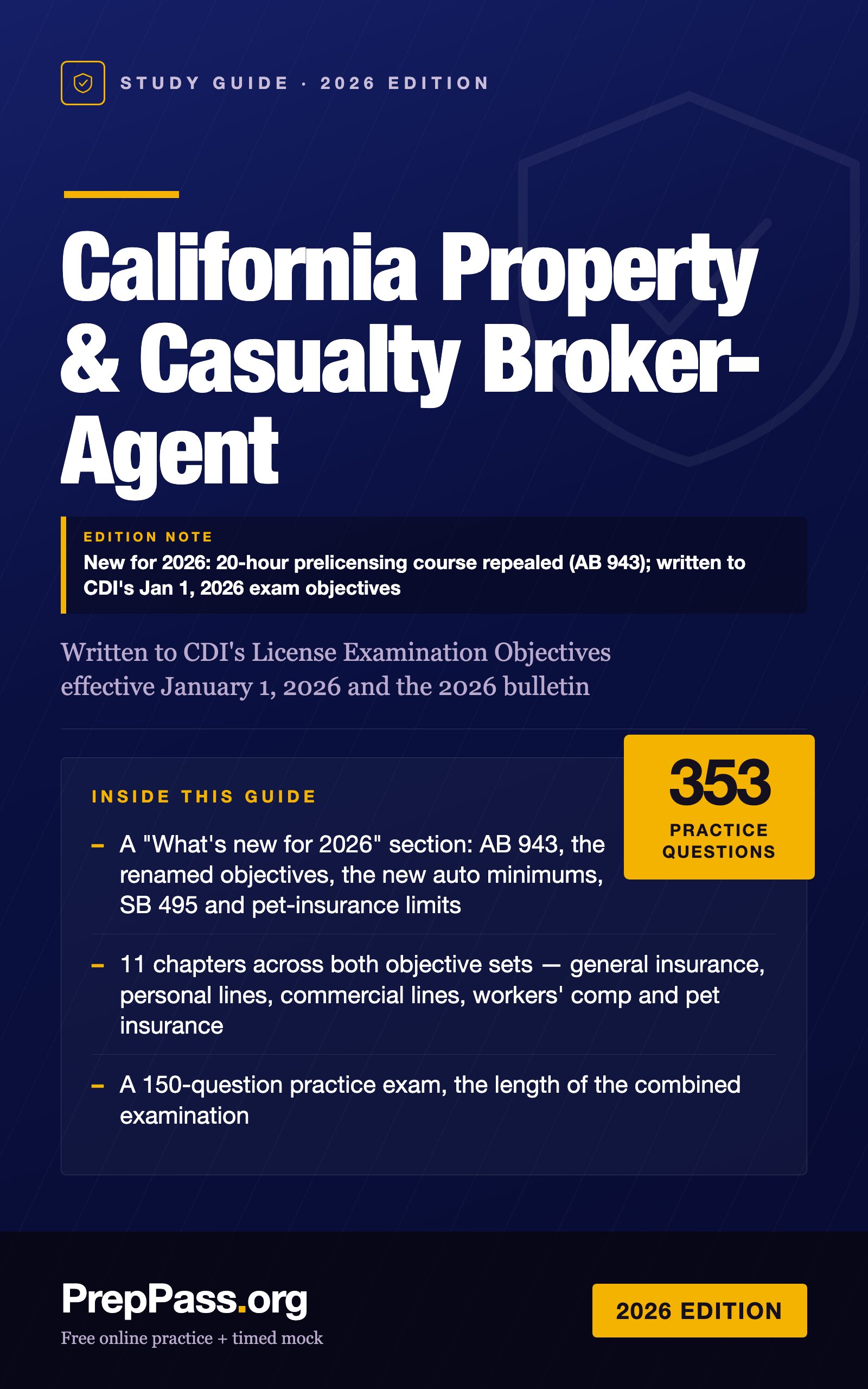
Luyện tập vẫn miễn phí. Trọn bộ hướng dẫn California Property & Casualty Broker-Agent là chính phần kiến thức, dạy từ đầu đến cuối — tệp PDF + EPUB tải về, thuộc về bạn.