Bảo hiểm Bồi thường Tai nạn Lao động
Bồi thường tai nạn lao động là loại bảo hiểm thương mại bắt buộc lâu đời nhất ở California và là loại có khả năng cao nhất khiến chủ sử dụng lao động phải chịu cả hậu quả hình sự lẫn dân sự nếu thiếu nó. Chương này sẽ dẫn bạn qua thỏa thuận luật định không lỗi nằm ở trung tâm của hệ thống, ai phải được bảo hiểm theo Cal. Labor Code §3700, cách hợp đồng tiêu chuẩn được xây dựng xung quanh Part One và Part Two, người lao động bị thương thực tế nhận được những phúc lợi nào, và cách các yêu cầu bồi thường WC, phân loại và phí bảo hiểm được xử lý tại California. Khoảng 7% bài thi hỏi về tài liệu này, vì vậy hiểu được cấu trúc ở đây sẽ giúp bạn lấy lại nhiều câu hỏi.
Thỏa thuận Luật định Không Lỗi
Bồi thường tai nạn lao động là một hệ thống luật định không lỗi với phương thức bồi thường độc quyền. Nhân viên bị thương không phải chứng minh chủ sử dụng lao động có sơ suất và chủ sử dụng lao động không thể bào chữa yêu cầu bồi thường bằng cách lập luận rằng nhân viên đã bất cẩn. Đổi lại bộ phúc lợi tự động, có thể dự đoán đó, nhân viên từ bỏ quyền khởi kiện chủ sử dụng lao động theo luật bồi thường về thương tích liên quan đến công việc. Hệ thống được tạo ra để thay thế kiện tụng dân sự chậm chạp, tốn kém và không chắc chắn từng theo sau mọi thương tích tại nơi làm việc. 'Thỏa thuận lớn' là một sự đánh đổi: nhân viên đánh đổi cơ hội nhận được phán quyết bồi thường lớn lấy sự chắc chắn về chăm sóc y tế và thay thế tiền lương một phần, trong khi chủ sử dụng lao động đánh đổi rủi ro không dự đoán được trước bồi thẩm đoàn để có chi phí bảo hiểm có thể dự đoán được.
Ai Phải Có Bảo hiểm — Cal. Labor Code §3700
California là tiểu bang nghiêm khắc nhất nước Mỹ về bảo hiểm bồi thường tai nạn lao động. Cal. Labor Code §3700 yêu cầu mọi chủ sử dụng lao động chỉ cần có một nhân viên là phải mua hợp đồng bồi thường tai nạn lao động từ công ty bảo hiểm được cấp phép hoặc được tiểu bang chấp thuận tự bảo hiểm. Không có ngoại lệ về số người, ngành nghề hay quỹ lương. Việc không có bảo hiểm là tội tiểu hình theo §3700.5, và Bộ phận Thi hành Tiêu chuẩn Lao động có thể ban hành lệnh đình chỉ theo §3722 buộc doanh nghiệp đóng cửa cho đến khi có bảo hiểm và áp dụng các hình phạt dân sự (thường là 1.500 USD mỗi nhân viên theo lệnh đình chỉ, kèm các mức tối thiểu theo luật định). Ngoài tiền phạt, chủ sử dụng lao động không có bảo hiểm vẫn chịu trách nhiệm cá nhân về từng đô la phúc lợi của người lao động bị thương, và người lao động có thể khởi kiện chủ sử dụng lao động ra tòa dân sự mà không bị các biện hộ thông thường của hệ thống bồi thường tai nạn lao động ngăn cản.
Hợp đồng Tiêu chuẩn — Part One và Part Two
Hợp đồng Bồi thường Tai nạn Lao động và Trách nhiệm Chủ sử dụng Lao động được sử dụng tại California có hai phần bảo hiểm riêng biệt. Part One — Workers' Compensation chi trả các phúc lợi luật định mà người lao động bị thương được hưởng theo Cal. Labor Code. Vì nghĩa vụ của công ty bảo hiểm là trả bất cứ điều gì tiểu bang yêu cầu, Part One không có giới hạn bằng tiền. Part Two — Employers Liability là bảo hiểm trách nhiệm đúng nghĩa, đáp ứng khi nhân viên hoặc thành viên gia đình khởi kiện chủ sử dụng lao động về một thương tích nằm ngoài hệ thống WC. Các tình huống Part Two cổ điển bao gồm các vụ kiện 'dual-capacity' (nơi chủ sử dụng lao động cũng tình cờ là nhà sản xuất sản phẩm gây thương tích cho người lao động), thương tích thân thể phái sinh đối với vợ/chồng hoặc con, third-party-over (bên thứ ba đã trả cho người lao động nay đòi chủ sử dụng lao động bồi thường), và các vụ kiện mất quyền chung sống do vợ/chồng khởi kiện. Part Two mang ba giới hạn riêng biệt — thương tích thân thể do tai nạn (mỗi tai nạn), thương tích thân thể do bệnh tật (tổng giới hạn hợp đồng), và thương tích thân thể do bệnh tật (mỗi nhân viên) — và mức tối thiểu California thường được viết là $1M/$1M/$1M California minimum.
Phúc lợi Cung cấp cho Người Lao động Bị Thương
Bồi thường tai nạn lao động California chi trả một danh mục phúc lợi luật định cụ thể. Điều trị y tế được cung cấp cho thương tích nghề nghiệp không giới hạn bằng tiền, mặc dù điều trị chỉnh hình cột sống, vật lý trị liệu và châm cứu nói chung được giới hạn ở 24 lượt thăm khám mỗi loại cho mỗi thương tích. Mất khả năng tạm thời (TD) thay thế tiền lương bị mất khi người lao động hồi phục và không thể làm việc, được trả bằng hai phần ba mức lương trung bình hàng tuần (AWW), với mức tối thiểu và tối đa theo luật định được điều chỉnh hằng năm. Mất khả năng vĩnh viễn (PD) được trả khi bác sĩ xác định người lao động có suy giảm chức năng vĩnh viễn sau khi đạt được cải thiện y tế tối đa; tỷ lệ suy giảm chức năng từ Permanent Disability Rating Schedule, được điều chỉnh theo độ tuổi và nghề nghiệp, sẽ quyết định số tuần và số tiền. Một phiếu phúc lợi vĩnh viễn thay thế công việc (SJDB) (hiện lên đến 6.000 USD) được cấp cho những người lao động mà chủ sử dụng lao động không thể cung cấp công việc thường lệ, đã sửa đổi hoặc thay thế, và chi trả cho việc đào tạo lại, sách, dụng cụ và chứng nhận. Phúc lợi tử vong cung cấp khoản trợ cấp mai táng cộng với các khoản chi trả hàng tuần liên tục cho người phụ thuộc, với tổng số tiền tùy thuộc vào số lượng người phụ thuộc toàn phần và một phần.
Nhân viên so với Nhà thầu Độc lập — Bài Kiểm tra ABC
Chỉ nhân viên mới được hưởng bồi thường tai nạn lao động, vì vậy ranh giới giữa nhân viên và nhà thầu độc lập rất quan trọng. Kể từ AB 5 năm 2019, California sử dụng bài kiểm tra ABC được luật hóa tại Cal. Labor Code §2775. Người lao động được giả định là nhân viên trừ khi doanh nghiệp thuê chứng minh được CẢ BA điều kiện: (A) người lao động không chịu sự kiểm soát và chỉ đạo của bên thuê trong việc thực hiện công việc, (B) công việc được thực hiện nằm ngoài hoạt động kinh doanh thông thường của bên thuê, và (C) người lao động thường xuyên hành nghề trong một thương mại, nghề nghiệp hoặc kinh doanh độc lập đã được thiết lập có bản chất tương tự. Việc phân loại sai người lao động không tránh được nghĩa vụ WC — nếu người lao động thực sự là nhân viên theo bài kiểm tra ABC, công ty bảo hiểm WC sẽ chi trả yêu cầu bồi thường và chủ sử dụng lao động sẽ phải đối mặt với việc điều chỉnh phí bảo hiểm và các hình phạt tiềm năng. Một quy tắc California riêng biệt, Cal. Labor Code §2750.5, giả định rằng bất kỳ người không có giấy phép nào thực hiện công việc đòi hỏi giấy phép nhà thầu đều là nhân viên của nhà thầu thuê, bất kể các bên gắn nhãn mối quan hệ như thế nào.
Miễn trừ cho Chủ sở hữu và Viên chức
Không phải mọi người tại doanh nghiệp đều tự động là 'nhân viên' cho mục đích WC. Một chủ doanh nghiệp cá thể làm việc trong doanh nghiệp của mình nói chung không phải là nhân viên của chính họ và không bắt buộc phải tự bảo hiểm. Các đối tác chung đang hoạt động cũng có thể chọn không tham gia. Đối với một công ty, Cal. Labor Code §3351 và §3352 cho phép một viên chức công ty sở hữu đủ tỷ lệ cổ phần — bao gồm cả cổ đông duy nhất đồng thời là viên chức — ký miễn trừ bằng văn bản và loại trừ bản thân khỏi bảo hiểm. Miễn trừ phải bằng văn bản và được nộp cho công ty bảo hiểm. Các nhân viên thường lệ của công ty đối tác, LLC hoặc công ty cổ phần vẫn phải được bảo hiểm. Những miễn trừ này chỉ miễn cho chủ sở hữu khỏi được bảo hiểm như một người lao động; chúng không bao giờ miễn cho doanh nghiệp khỏi việc bảo hiểm cho các nhân viên không phải chủ sở hữu.
Yêu cầu Bồi thường, Điều tra và Thời hạn
Quy trình yêu cầu bồi thường được xây dựng xoay quanh một vài thời hạn cứng. Khi chủ sử dụng lao động biết về một thương tích nghề nghiệp, Cal. Labor Code §5401 cho chủ sử dụng lao động một ngày làm việc để cung cấp cho người lao động bị thương một mẫu DWC-1. Sau khi mẫu yêu cầu bồi thường đã hoàn tất được nộp cho chủ sử dụng lao động, Cal. Labor Code §5402 yêu cầu công ty bảo hiểm điều tra và chấp nhận hoặc từ chối yêu cầu bồi thường trong vòng 90 ngày. Nếu yêu cầu bồi thường không bị từ chối trong cửa sổ 90 ngày đó, thương tích được giả định thuộc diện bồi thường, và giả định này chỉ có thể bị bác bỏ bằng chứng cứ không thể phát hiện được với sự cần mẫn hợp lý trong vòng 90 ngày đó. Trong khi điều tra đang diễn ra, công ty bảo hiểm phải cho phép điều trị y tế tới 10.000 USD. Tranh chấp giữa người lao động, chủ sử dụng lao động và công ty bảo hiểm được phân xử bởi Bộ phận Bồi thường Lao động (DWC) và các thẩm phán hành chính của bộ phận này, chứ không phải bởi tòa án dân sự. Nếu công ty bảo hiểm WC chi trả phúc lợi vì một thương tích do bên thứ ba không liên quan gây ra (ví dụ, một tài xế giao hàng vượt đèn đỏ), Cal. Labor Code §3852 cho phép công ty bảo hiểm thế quyền đối với bên thứ ba đó để thu hồi những gì đã trả.
Phí Bảo hiểm, Phân loại, X-Mod và Quỹ Chủ Lao động Không Bảo hiểm
Phí bảo hiểm bồi thường tai nạn lao động bắt đầu bằng các mã phân loại do WCIRB ấn định để phản ánh loại công việc mà một nhân viên thực sự thực hiện — mã của thợ lợp mái có tỷ lệ cao hơn nhiều so với mã của nhân viên văn phòng. Mỗi mã phân loại có một mức phí cơ bản trên mỗi 100 USD quỹ lương. Quỹ lương của chủ sử dụng lao động theo phân loại được nhân với tỷ lệ, và kết quả được điều chỉnh bởi Experience Modification Factor (X-Mod). WCIRB tính X-Mod bằng cách so sánh tổn thất thực tế của chủ sử dụng lao động trong một giai đoạn nhiều năm gần đây với tổn thất kỳ vọng trung bình của các doanh nghiệp có cùng mã phân loại và quy mô: X-Mod bằng 1,00 là trung bình, dưới 1,00 làm giảm phí (lịch sử tổn thất tốt), và trên 1,00 làm tăng phí (lịch sử tổn thất xấu hơn trung bình). Khi một chủ sử dụng lao động phá luật và hoạt động không có bảo hiểm, người lao động bị thương không bị bỏ rơi: Quỹ Tín thác Phúc lợi Chủ Lao động Không Bảo hiểm (UEBTF), được thành lập theo Cal. Labor Code §3716 và do DWC quản lý, sẽ trả các phúc lợi bồi thường tai nạn lao động và sau đó theo đuổi chủ sử dụng lao động không có bảo hiểm để thu hồi những gì đã trả.
Last updated: October 2026
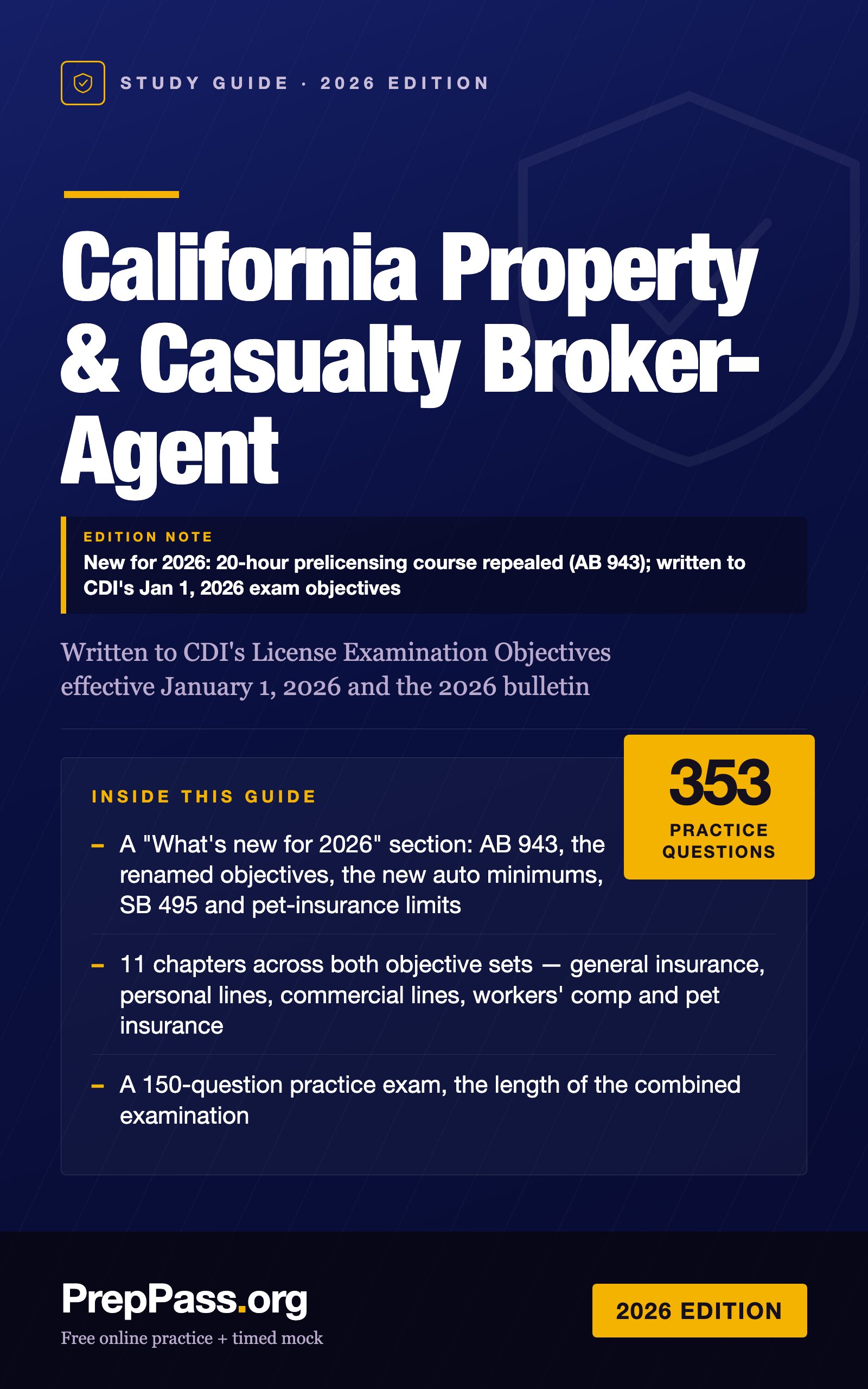
Luyện tập vẫn miễn phí. Trọn bộ hướng dẫn California Property & Casualty Broker-Agent là chính phần kiến thức, dạy từ đầu đến cuối — tệp PDF + EPUB tải về, thuộc về bạn.