Contamination, Cross-Contact, and Allergens
Contamination is the presence of harmful substances in food, and it can be biological, chemical, or physical. Allergens are a special case: harmless to most people but dangerous to those who are sensitive. This chapter shows you how contaminants get into food and how to keep them out.
The Three Types of Contamination
Every hazard in your kitchen falls into one of three buckets. Biological contaminants are living things — bacteria, viruses, parasites, and fungi — and cause the majority of foodborne illness. Chemical contaminants include cleaning agents, sanitizers, pesticides, and even toxic metals leached from the wrong containers, such as acidic food stored in copper or galvanized pans. Physical contaminants are foreign objects that end up in food: glass shards, metal shavings, bandages, hair, fingernails, or bits of packaging. Some hazards, like fish toxins, are naturally occurring and cannot be seen. As a manager you should train staff to recognize all three types, because the prevention steps differ: temperature control for biological, proper storage and labeling for chemical, and careful handling and equipment maintenance for physical.
Cross-Contamination and Cross-Contact
Cross-contamination happens when pathogens move from one surface or food to another — for example, raw chicken juice dripping onto lettuce, or a cutting board used for raw meat then for salad without cleaning. You prevent it by separating raw and ready-to-eat foods, using color-coded boards and utensils, cleaning and sanitizing between tasks, and storing raw meats below ready-to-eat foods in the cooler. Cross-contact is the allergen version of the same problem: an allergen protein transfers from one food to another, such as using the same fryer oil for breaded shrimp and French fries. Unlike pathogens, allergens are not destroyed by cooking, so cross-contact requires its own dedicated equipment, thorough cleaning, and clear communication between the kitchen and the guest.
The Big Nine Allergens
U.S. law now recognizes nine major food allergens that account for the vast majority of serious allergic reactions: milk, eggs, fish, shellfish (crustaceans), tree nuts, peanuts, wheat, soybeans, and sesame. Sesame became the ninth officially recognized allergen under the FASTER Act, effective January 2023. A sensitive person can react to even a trace amount, and a severe reaction called anaphylaxis can close the airway and be fatal within minutes. Symptoms include hives, itching, swelling of the lips or tongue, wheezing, and vomiting. Managers must be able to tell guests exactly which allergens are in a dish and how it is prepared. Never guess — if you are not certain a dish is allergen-free, say so, and offer a menu item you can guarantee.
Serving Guests with Allergies (ALERT)
The industry uses the acronym ALERT to organize allergen safety. A stands for Approve suppliers and check that ingredient labels are accurate. L stands for Look at the menu and be ready to describe every ingredient. E stands for Employee training so all staff know the Big Nine and how to respond. R stands for Respond to the guest's request accurately and, if unsure, direct them to a manager. T stands for Tell the guest which items are safe and how the food is handled. When a guest declares an allergy, the kitchen should prepare the meal separately with clean hands, clean gloves, clean utensils, and clean surfaces, and deliver it directly to that guest, not through a general expo line where mix-ups happen.
Last updated: October 2026
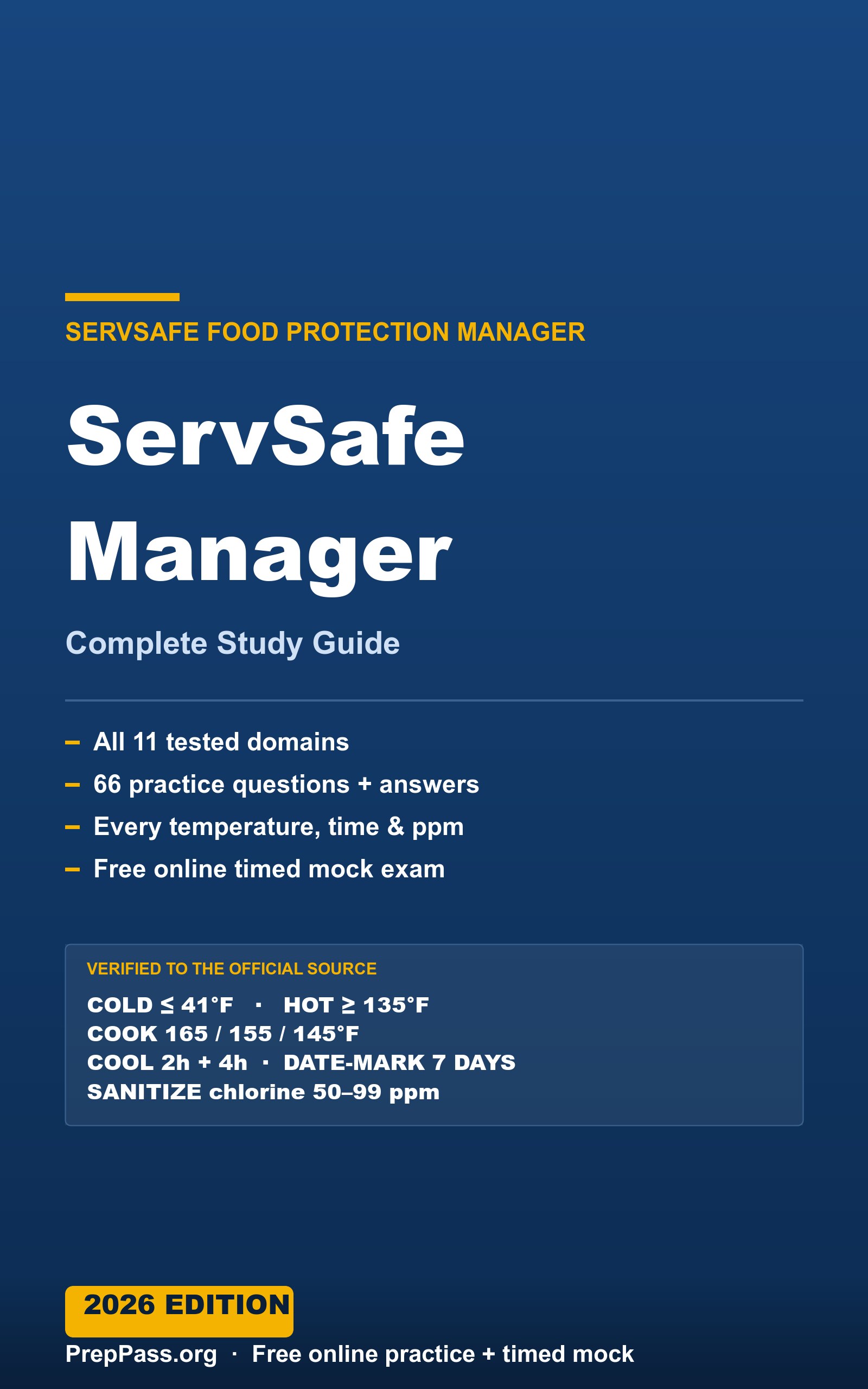
Trong sách hướng dẫn ServSafe Food Protection Manager: Mỗi chương trong 8 chương đều khép lại bằng một bài kiểm tra, kèm đáp án giải thích từng câu. Luyện tập ở đây vẫn miễn phí.