Foodborne Illness Basics
A foodborne illness is a sickness carried to people by the food they eat, and when two or more people get the same illness from the same meal it becomes a foodborne-illness outbreak. As a manager your job is to understand what makes food unsafe so you can stop problems before a guest ever gets sick.
The Big Six Pathogens
Most foodborne illness comes from biological contaminants, and the government has singled out six pathogens as so contagious and severe that a person carrying them must be kept out of your operation. These "Big Six" are Norovirus, Hepatitis A, Shigella, Shiga toxin-producing E. coli (STEC), Salmonella Typhi, and nontyphoidal Salmonella. Several of them are spread through the fecal-oral route, which is exactly why handwashing after using the restroom is non-negotiable. Norovirus and Hepatitis A come mainly from ready-to-eat food touched by infected workers; Salmonella Typhi and nontyphoidal Salmonella from poultry, eggs, and produce; Shigella from flies and unwashed hands; and E. coli from ground beef and contaminated produce. Knowing the source helps you target the right control, whether that is cooking, handwashing, or supplier selection.
TCS Foods
Time/Temperature Control for Safety (TCS) foods are the items that support rapid pathogen growth and therefore need strict time and temperature limits. Classic examples include milk and dairy, shell eggs, meat, poultry, fish, shellfish and crustaceans, baked potatoes, heat-treated plant foods like cooked rice, beans, and vegetables, tofu and other soy protein, sprouts and cut leafy greens, cut tomatoes, and cut melons. These foods share traits that microbes love: they are moist, protein-rich or high in carbohydrate, and have a neutral pH. Non-TCS foods such as dry pasta, uncut produce, and commercial mayonnaise are far more stable. When you can identify a TCS food on sight, you know instantly that it needs to stay out of the temperature danger zone.
FAT TOM: Conditions for Growth
Pathogens need the right conditions to multiply, summed up by the acronym FAT TOM: Food, Acidity, Temperature, Time, Oxygen, and Moisture. Microbes need nutrient-rich Food, a near-neutral Acidity (pH 7.5 down to 4.6), and warm Temperatures in the danger zone of 41°F to 135°F. Given enough Time — as little as four hours in that zone — a single bacterium can multiply into millions. Some bacteria need Oxygen while others thrive without it, and nearly all need Moisture, measured as water activity (aw) above 0.85. As a manager you cannot easily change food, oxygen, or acidity in most menu items, so your practical levers are temperature and time. Controlling those two factors is the foundation of nearly every food-safety rule you will enforce.
Toxins and Chemical Hazards
Not every hazard is a living microbe. Some fish carry natural toxins that cannot be cooked, frozen, or canned away. Scombroid poisoning comes from tuna, mahi-mahi, and bonito that were time-temperature abused, letting histamine build up. Ciguatera poisoning comes from large predatory reef fish like barracuda and grouper that ate smaller toxic fish. Certain wild mushrooms and shellfish from contaminated waters also carry toxins. Because these toxins are already formed and heat-stable, your only defense is buying from approved, reputable suppliers and keeping fish cold from the moment it arrives. Chemical hazards — cleaners, sanitizers, and pesticides — round out the picture and are prevented by proper labeling and storing chemicals away from food.
High-Risk Populations
Some guests get much sicker from foodborne illness than others, and a good manager keeps them in mind. The highest-risk groups are the very young (preschool-age children), older adults, pregnant women, and people with weakened immune systems, including those with cancer, HIV, or organ transplants. These populations have immune systems that are still developing, declining, or compromised, so even a small dose of a pathogen can cause severe illness. Facilities that serve these groups — hospitals, nursing homes, day cares — are called highly susceptible populations and often face stricter rules, such as bans on serving raw or undercooked animal foods and raw sprouts. Knowing your audience helps you decide how conservative your menu and handling need to be.
Last updated: October 2026
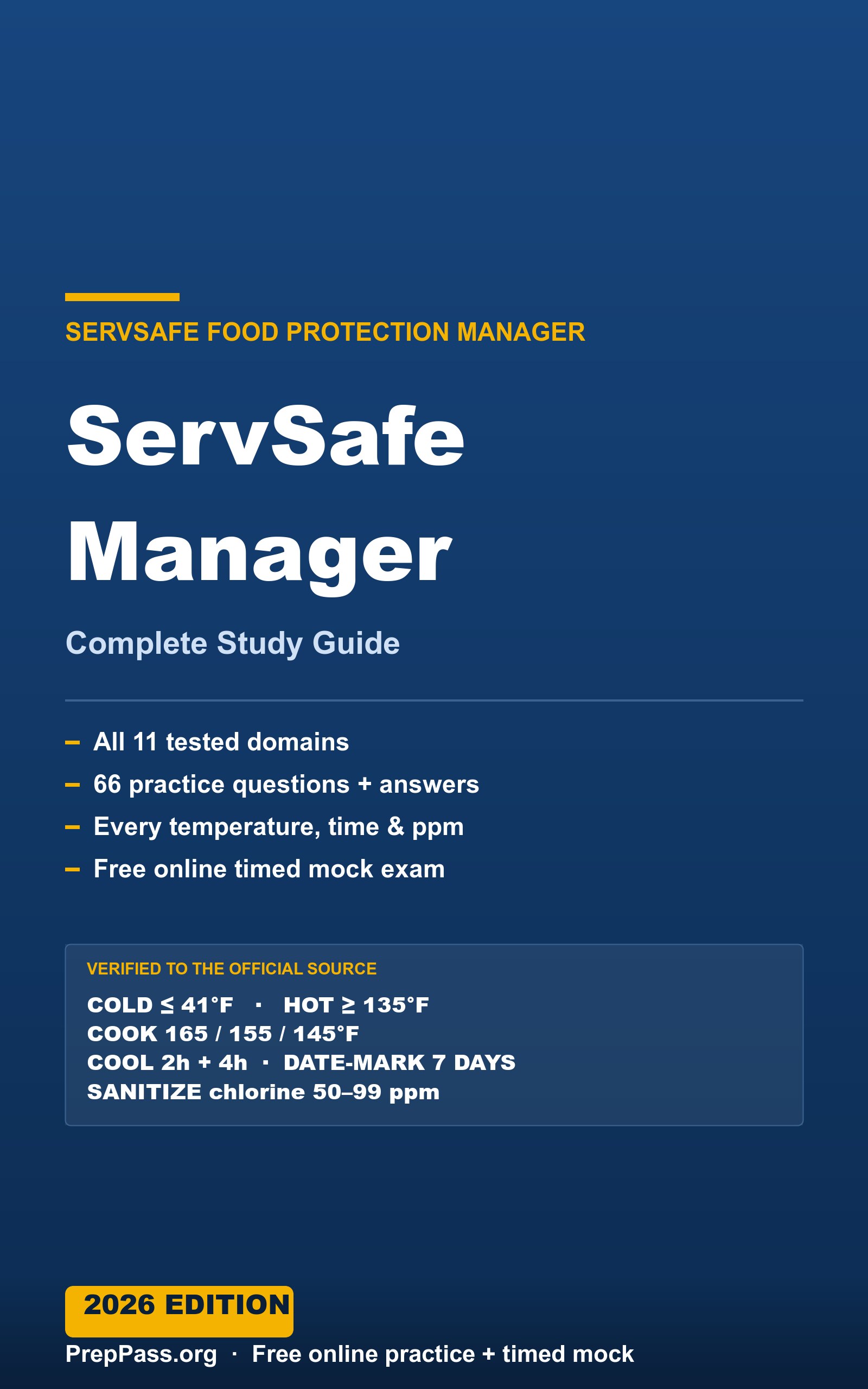
Trong sách hướng dẫn ServSafe Food Protection Manager: Mỗi chương trong 8 chương đều khép lại bằng một bài kiểm tra, kèm đáp án giải thích từng câu. Luyện tập ở đây vẫn miễn phí.