Chapter 3 of 621% of exam

Endocrine, Hematology/Immunology, GI, Renal/GU and Integumentary

This is the largest clinical section and spans five body systems. The questions reward knowing the sequence of treatment in hyperglycemic crises, the bleeding and clotting disorders seen in the ICU, the management of GI bleeding, pancreatitis and liver failure, and the recognition of kidney and skin injury.

Endocrine emergencies

Hyperglycemic crises follow a clear order: fluids, check potassium, insulin, then add dextrose while the ketoacidosis clears. Disorders of water balance (SIADH and diabetes insipidus) are opposites and are managed in opposite ways. Adrenal crisis and thyroid storm are recognized clinically and treated before confirmatory results.

Potassium before insulin
If potassium is below 3.5 mmol/L, replace it and delay insulin until it rises above 3.5.
ADA/EASD Hyperglycemic Crises Consensus, Diabetes Care 2024
Add dextrose at 250
When glucose falls below 250 mg/dL in DKA, add 5–10% dextrose and continue insulin until ketoacidosis resolves.
ADA/EASD Consensus 2024
Euglycemic DKA
Ketoacidosis with glucose below 200 mg/dL, notably with SGLT2 inhibitors.
ADA/EASD Consensus 2024
SIADH vs DI
SIADH: hyponatremia with concentrated urine, restrict fluids first. Central DI: large dilute urine and rising sodium, give desmopressin.
MedlinePlus (NLM), SIADH; Diabetes insipidus
Adrenal crisis
Give IV or IM hydrocortisone right away; abrupt withdrawal of long-term steroids is a classic trigger.
MedlinePlus (NLM), Acute adrenal crisis

Bleeding, clotting and transfusion

ICU patients can develop consumptive coagulopathy, drug-induced thrombocytopenia and transfusion reactions. Each has a specific first action. Heparin-induced thrombocytopenia is a clotting disorder despite the low platelet count.

HIT management
With intermediate or high probability, stop all heparin and start a non-heparin anticoagulant; do not start warfarin until platelets recover.
ASH 2018 HIT guideline
Platelets in HIT
Routine platelet transfusion is not suggested unless bleeding or at high bleeding risk.
ASH 2018 HIT guideline
Hemolytic transfusion reaction
Fever, chills, flank pain or dark urine during a transfusion: stop the transfusion immediately.
MedlinePlus (NLM), Hemolytic transfusion reaction
DIC
Treat the cause; plasma replaces factors when bleeding dominates and heparin may be used when clotting dominates.
MedlinePlus (NLM), DIC
Protamine
Give slowly, no more than 50 mg in 10 minutes, about 1 mg per 100 units of heparin, with resuscitation available.
DailyMed, heparin label

Gastrointestinal and hepatic problems

Variceal bleeding threatens the airway as well as the circulation. Pancreatitis care has moved toward moderate fluids with lactated Ringer's and early feeding. Hepatic encephalopathy is treated by lowering ammonia and removing triggers such as bleeding, infection and sedatives.

Varices
Protect the airway in massive bleeding; vasoconstrictors such as octreotide and endoscopic banding control bleeding.
MedlinePlus (NLM), Bleeding esophageal varices
Pancreatitis fluids
Moderately aggressive resuscitation, lactated Ringer's preferred over saline, with caution in heart or kidney disease.
ACG Acute Pancreatitis Guideline 2024
Early feeding
In mild pancreatitis, start oral feeding within 24–48 hours as tolerated.
ACG Acute Pancreatitis Guideline 2024
Lactulose goal
Titrate to about 2–3 soft stools daily (2–4 in acute episodes), adding rifaximin as indicated.
ACG Hepatic Encephalopathy Guideline
Lipase
Lipase is more specific for pancreatitis than amylase.
MedlinePlus (NLM), Acute pancreatitis

Kidney and skin injury

Acute kidney injury brings danger from potassium, fluid and uremia, and many cases are drug-related. Pressure injury prevention depends on repositioning, off-loading and skin care, with extra attention to early signs in darker skin.

Hyperkalemia with ECG changes
IV calcium first to protect the heart, then measures that shift or remove potassium.
MedlinePlus (NLM), High potassium level
Nephrotoxins
NSAIDs, IV contrast and certain antibiotics and blood pressure medicines can cause AKI.
MedlinePlus (NLM), Acute kidney failure
Dialysis triggers
Dangerous potassium, fluid overload, pericarditis, mental status change or rising nitrogen wastes.
MedlinePlus (NLM), Acute kidney failure
Pressure injury prevention
Reposition every 1–2 hours, float heels, avoid pillows under knees, keep the head of the bed at 30° or less when allowed.
MedlinePlus (NLM), Preventing pressure injuries

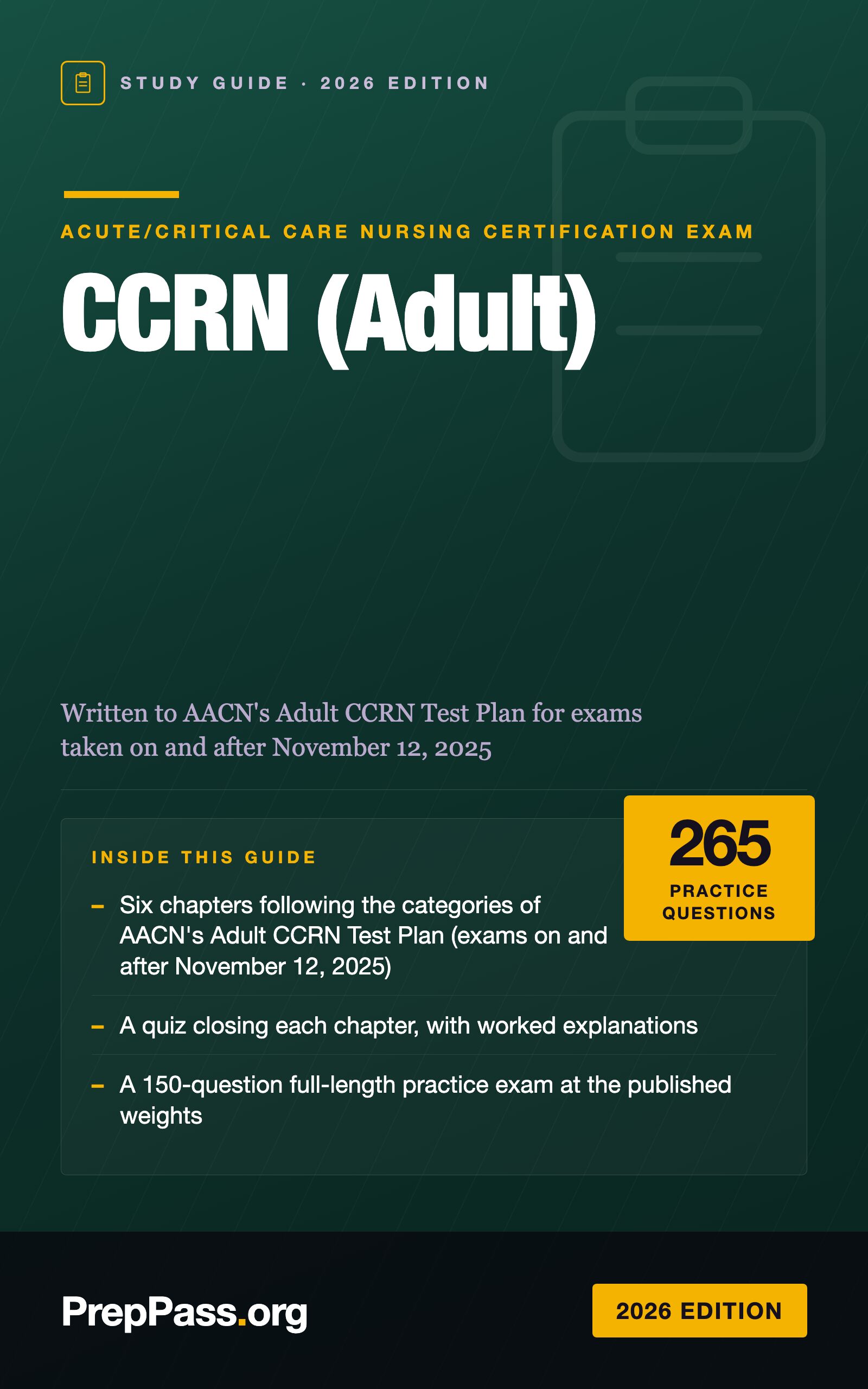
Keep going: the full CCRN (Adult) — Acute/Critical Care Nursing Certification Exam guide covers every section of the exam. CCRN (Adult) Study Guide — 2026 Edition — PDF + EPUB, $24.99 · 14-day refund →
Studying in order?

Practice stays free. The full CCRN (Adult) — Acute/Critical Care Nursing Certification Exam study guide is the material itself, taught start to finish — a downloadable PDF + EPUB you keep.

Get the book — $24.99
Report