Domain III: Implementing Effective, Responsive Instruction and Assessment
TEA weights Domain III at about 33%, and it also assesses the Technology Applications standards. Its competencies cover communication (007), engagement (008), technology (009), and monitoring, feedback and flexible response (010). For worked examples, named traps and full explanations, see the PrepPass TExES PPR EC–12 Study Guide.
Communication and questioning
Ask questions at several levels, to all students, and wait three to five seconds before calling on anyone; probe thin answers and redirect to classmates. Give short, checked directions and change the representation when students are confused. Keep electronic communication with students professional and open.
Engagement and motivation
Engagement means thinking about the objective, not just activity. Match techniques to goals, group and pace flexibly, make content relevant, and use tasks that are challenging but achievable. Beginning and intermediate English learners also need focused, targeted and systematic English language instruction.
Technology
Choose tools that serve the objective and that every student can use; follow copyright (four fair-use factors), privacy, filtering and acceptable use rules; teach students to evaluate online information; and integrate the Technology Applications TEKS strands.
Assessment and feedback
Use formative assessment during learning and summative assessment after it. Share rubrics before students begin; give timely, specific feedback on what to change; teach self-assessment; and adjust when evidence shows a lesson is not working.
Keep going: the full TExES Pedagogy and Professional Responsibilities EC–12 (160) guide covers every section of the exam. TExES PPR EC–12 (160) Study Guide — 2026 Edition — PDF + EPUB, $24.99 · 14-day refund →
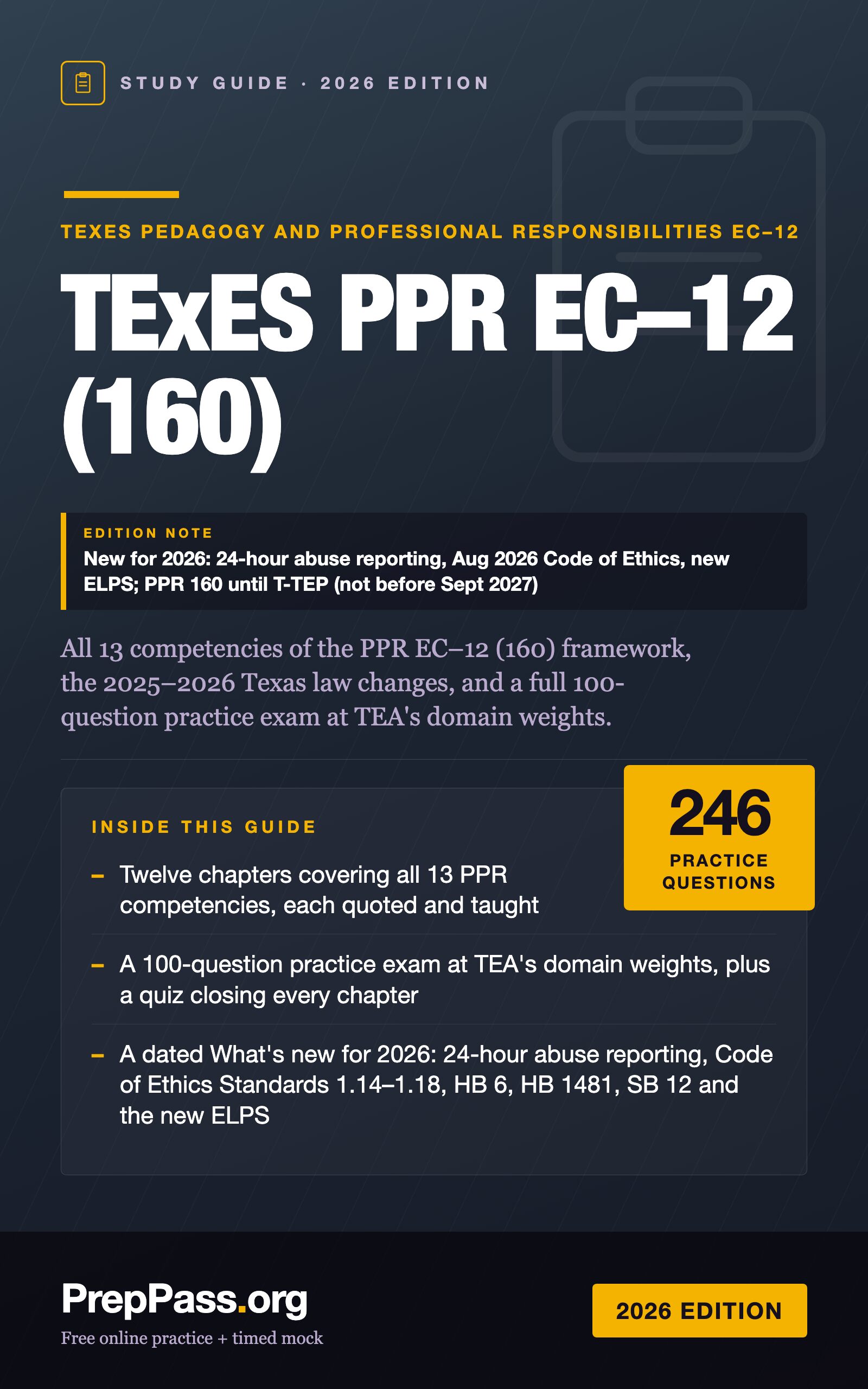
Practice stays free. The full TExES Pedagogy and Professional Responsibilities EC–12 (160) study guide is the material itself, taught start to finish — a downloadable PDF + EPUB you keep.