学习材料
用通俗易懂的方式掌握考试的每个主题。
Disinfection, Infection Control & Safety
Disinfection and infection control make up the single largest block of the California esthetician written exam, roughly 30 percent of the questions, and they are also the area that generates the most inspection citations and the most client harm. The Board's health and safety regulations are written around one core idea: nothing that touches one client's skin may reach another client without being either discarded or properly cleaned and disinfected. This chapter covers the three levels of decontamination, what an acceptable disinfectant is, how porous and non-porous items differ, what to do when blood appears, and the daily habits that keep an establishment compliant.
Skin Sciences: Structure, Conditions & Contraindications
About a quarter of the exam tests whether you understand the skin you are working on: how it is built, what it does, how it ages, how hair grows out of it, and, most importantly, when a condition in front of you belongs to a physician rather than to an esthetician. The exam repeatedly frames this as a judgment question, giving you a description of skin and asking whether you treat, modify, or refer. Learning the layers and the lesion vocabulary is what lets you describe skin accurately without ever crossing into diagnosis.
Facial Treatments, Hair Removal & Client Services
This chapter covers the hands-on core of esthetic practice: consulting with the client, analyzing the skin, cleansing and exfoliating, extracting, masking, massaging, peeling within legal limits, removing hair, and finishing with lash, brow, and makeup services. About a quarter of the exam is drawn from this material, and the questions are almost always framed as decisions in the treatment room rather than definitions. The thread running through all of it is the same: identify contraindications before you begin, work only on the surface of intact skin, and stop the moment the skin tells you it has had enough.
Cosmetic Chemistry & Electrical Modalities
Roughly ten percent of the exam covers what is in the products you apply and what the machines in the treatment room actually do. You do not need to be a chemist, but you do need to read a label intelligently, understand what pH means for an exfoliating product, recognize the difference between a humectant and an occlusive, and know precisely who should not receive an electrical treatment. Contraindications for electrotherapy are among the most reliably tested points in this section because the consequences of getting them wrong are medical rather than cosmetic.
California Law, Scope of Practice & Establishment Rules
The final ten percent of the exam covers the Barbering and Cosmetology Act, the Board's regulations, and the boundary between esthetic practice and the practice of medicine. Scope of practice is the highest-value material here because violating it is what ends careers: it is the difference between a citation and the unlicensed practice of medicine. The recurring exam pattern is a client requesting something that sounds routine but is legally out of bounds, and the correct answer is almost always to explain the limit clearly and refer the client to a licensed medical professional.
按主题练习
Jump straight into free practice questions for any single California Esthetician content area.
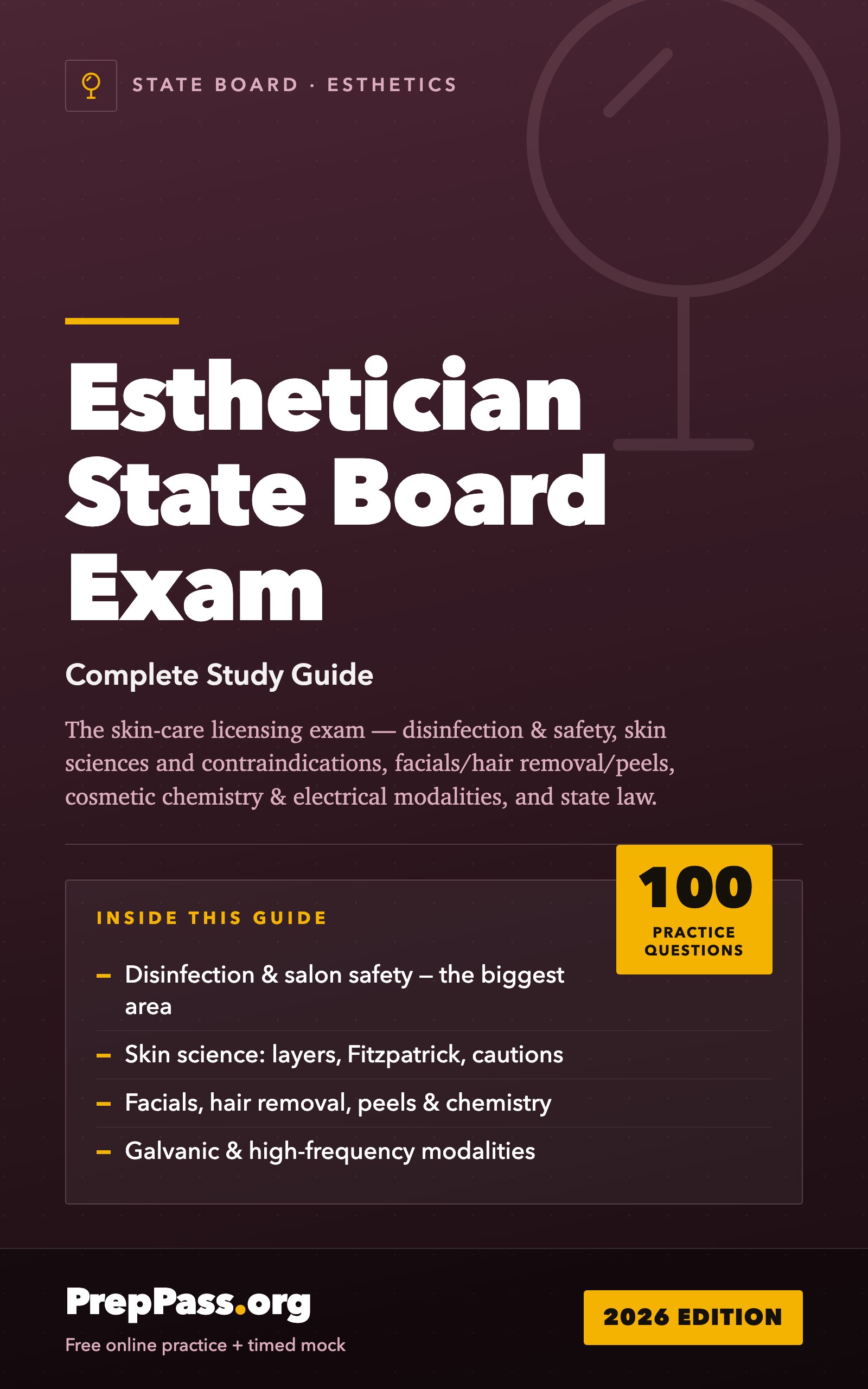
练习一直免费。完整的 Esthetician (State Board) 学习指南是知识本身,从头到尾讲清楚 —— 可下载的 PDF + EPUB,永久归你。